Nose and social status
The NoseThe nose in “The Nose” is both a missing part of Major Platon Kovaloff’s body and a figure able to claim a social identity more powerful than his own. Its transformation into a state councillor makes visible the link between bodily appearance and public standing: Kovaloff fears not only physical loss but the collapse of the status, introductions, and prospects he has carefully cultivated. The episode’s absurdity rests on a precise reversal—an organ becomes an official, while the man who once possessed it struggles to have his loss taken seriously.
Rank and Self-Presentation
Kovaloff’s identity is performed through titles and visible markers. Though he had been a committee-man in the Caucasus, he insists on being called “Major,” preserving the rank he once held rather than the title attached to his current position. He has come to Saint Petersburg seeking an appointment commensurate with his status, ideally vice-governor of a province, though he would accept a bailiff’s post. His seals, stiff clean collar, and daily walk on Nevsky Avenue help stage the importance he wants others to recognize.
His social ambitions extend to marriage. Kovaloff is willing to marry, but only a woman who can bring a dowry of two hundred thousand roubles. He also counts women of high standing among his acquaintances and makes regular social calls. In that setting, the nose’s absence is not an abstract bodily inconvenience: it threatens the face through which he appears in public and the prospects that depend on being seen as a respectable, eligible man.
The episode connects that status-consciousness to the barber-customer relationship. During shaving, Kovaloff habitually complains that Ivan Yakovlevitch’s hands smell; Ivan answers cynically and retaliates by soaping Kovaloff across the cheek, upper lip, chin, and behind the ears. The nose is thus introduced within an ordinary routine of grooming and touch, but the routine also underscores the dependence of Kovaloff’s public appearance on another person’s hands. Once the organ is gone, that everyday act of maintaining the face becomes inseparable from a crisis of identity.
A Body Part with an Official Identity
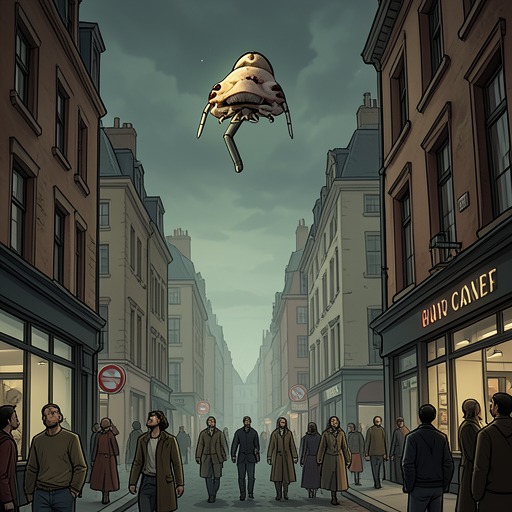
After discovering a smooth vacancy where his nose should be, Kovaloff encounters it arriving by carriage in uniform. It wears gold embroidery, a stiff high collar, chamois-leather trousers, and a sword; its plumed hat marks it as a state councillor. The nose is making duty calls, moving through the city with the equipment and assurance of a person of rank. Kovaloff, by contrast, has no nose and no way to make his own status legible without it.
When Kovaloff finally addresses the nose, he appeals to the impropriety of its departure. He explains that he is a Major, that he is seeking a post, and that he knows ladies of high position; he cannot, he argues, appear before them without such a prominent part of his body. His explanation treats the nose as essential not only to his physical completeness but to his standing in a society where appearance and recognition shape access to official and social life.
The nose answers by asserting its independence. It tells Kovaloff that it is itself and denies that they can have close relations, pointing to the different departments implied by the buttons on their uniforms. The joke makes bureaucratic rank more than a costume: it becomes a boundary the nose invokes to reject the body from which it came. Kovaloff’s claim of bodily ownership cannot compete with the nose’s public uniform and institutional distinction.
The sight of an elderly woman and her graceful daughter briefly draws Kovaloff back toward ordinary social display. He adjusts his collar and seals and smiles at the young woman, until he remembers the blank on his face and turns to denounce the nose. By then it has disappeared. The moment makes the loss concrete as an interruption of courtship: Kovaloff’s attention shifts from the woman to the absent feature that, in his view, prevents him from appearing before her properly.
Public Claims and Institutional Limits
Kovaloff tries to turn the loss into a matter for public notice. At the newspaper office he asks for an advertisement offering a reward to whoever brings back the runaway nose. He resists giving his name because he fears his lady acquaintances, including Madame Podtotchina, will hear of the embarrassment; he proposes that the notice identify him only as a committee-man or, preferably, a Major. Even while asking for help, he tries to control how the event will be attached to his public identity.
The official refuses to print the notice, worrying that it could compromise the paper and recalling an earlier advertisement for a lost black-haired poodle that had supposedly been a satire about an establishment cashier. Kovaloff insists that this is not satire but his own nose, almost himself. The exchange shows the difficulty of making an impossible bodily event credible within the ordinary categories of public information: the paper treats the request as a threat to its reputation, while Kovaloff experiences refusal as another denial of the reality of his loss.
The official suggests that Kovaloff instead present the incident as a curious natural freak for publication in the Northern Bee, but offers no practical recovery. He then extends a snuff-box in sympathy, saying snuff clears the head and banishes depression. The consolation turns pointedly comic because Kovaloff lacks the very feature needed to take snuff. A conventional remedy and polite gesture cannot meet the need they are meant to address; the missing nose has made an ordinary social kindness expose the absurdity of his condition.
Loss, Return, and Social Meaning
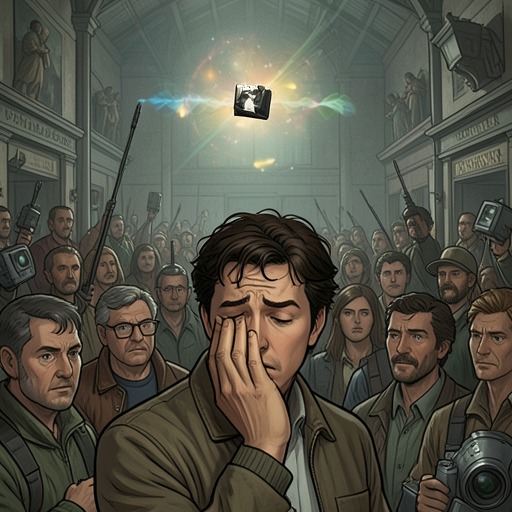
Alone at home, Kovaloff tests whether he is dreaming or hallucinating. He pinches himself hard enough to cry out, then looks in the mirror with his eyes closed, hoping the nose will be back when he opens them. It is not. In his agitated soliloquy, he compares the loss unfavorably with losing an arm or leg and tries to imagine a cause, including the possibility that he swallowed the brandy Ivan used after shaving. His explanations fail to make the disappearance intelligible, and the ordinary mirror confirms an extraordinary vacancy.
The nose returns without explanation on 7 April, in its proper place between Kovaloff’s cheeks, “as if nothing had happened.” He wakes, sees it in the mirror, touches it, washes, dries his face, and checks again. Repeated inspection replaces the earlier failed tests: this time both sight and touch assure him that the feature is present. The restoration is as abrupt and unaccountable as the disappearance, leaving no explanation for the nose’s independent career.
Kovaloff resumes his walks on Nevsky Avenue and visits to the theatre as though the episode had not occurred. His nose remains in place, and he is again described as smiling, good-humoured, and paying attentions to pretty girls. The return restores the social performances that the loss had interrupted, but it does not resolve what the episode has shown: the identity Kovaloff values depends on a face others can recognize, and on the rank he claims through titles and appearances.
The narrator refuses to smooth away the contradiction. The story calls attention to the improbability of a nose disappearing, appearing in public as a state councillor, and returning to its owner; it also questions why Kovaloff thought a newspaper would properly advertise a lost nose. That final emphasis on propriety makes the social comedy part of the mystery. The nose’s borrowed authority is fantastical, but the dependence on rank, public reputation, and acceptable forms of complaint belongs to the recognizable everyday world around it.